

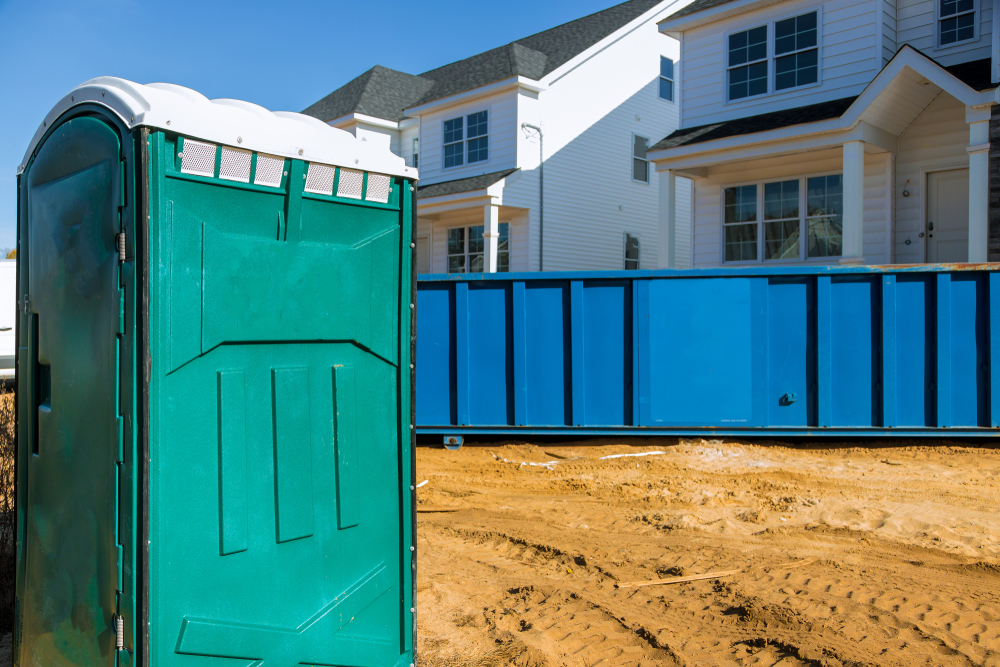
Keeping enough restroom facilities on a construction site is more than a convenience. Whether your crew is building in Napa, working on a commercial project in Fairfield, or moving between jobs in Vallejo and Vacaville, the number of workers on site affects how many toilets you need.
Quick answer: For California construction sites, Cal/OSHA generally requires a minimum of one separate toilet facility for every 20 employees or fraction thereof of each sex. An exception allows a single all-gender, single-user toilet when there are fewer than five employees. Actual jobsite needs can be higher based on crew size, work schedules, site layout, usage, and servicing frequency.
What local contractors should know
-
California construction requirements are the starting point, but a busy jobsite may benefit from more porta potties than the regulatory minimum.
-
Projects in Napa County and Solano County should account for subcontractors and other workers who may increase the number of people using the facilities during peak periods.
-
Large or spread-out jobsites in areas such as Fairfield, Vacaville, or Napa may need multiple restroom locations so workers have practical access.
-
Regular servicing matters because a unit that is heavily used can become a jobsite problem even when the total number of toilets technically meets the minimum.
-
Crew size can change throughout a project, so restroom planning should be revisited as construction moves from one phase to another.
How Many Porta Potties Are Required on a California Construction Site?
California construction rules generally require one separate toilet facility for every 20 employees or fraction thereof of each sex, with specific exceptions and provisions for single-user facilities. Cal/OSHA Section 1526 also allows toilets and urinals to be combined in meeting certain requirements, provided the required number of toilets is maintained.
For a small crew, that could mean a single unit. As the workforce grows, the required number increases.
The legal minimum should be treated as a starting point rather than an automatic recommendation for every project. A unit serving a crew through a long shift in summer conditions can receive substantial use. Subcontractors, inspectors, delivery personnel, and changing crew sizes can also affect demand.
Johnny on the Spot helps local construction teams plan portable restroom service around the realities of their jobsites. After this first mention, we focus on factors such as workforce, project duration, site access, and servicing needs when discussing an appropriate setup.
Why Does Porta Potty Planning Matter in Napa and Solano County?
Porta potty planning matters locally because construction sites across Napa and Solano County vary widely in size, location, access, and workforce patterns. A compact residential project near an established neighborhood has different restroom logistics from a large commercial, industrial, agricultural, or infrastructure jobsite.
Napa Valley projects can include sites where space and service access require careful placement. In Solano County, construction activity can stretch across communities such as Fairfield, Vacaville, Vallejo, Benicia, and Suisun City.
Local summer heat is another practical consideration. Restrooms should be placed where they are accessible to workers while still allowing service vehicles to reach them. Placement should also avoid interfering with active equipment routes, material staging, or other changing work zones.
What Do Cal/OSHA Rules Say About Construction Toilets?
Cal/OSHA Section 1526 requires construction employers to provide toilet facilities based on the number of employees, including at least one toilet under temporary field conditions. The regulation also requires toilets to be kept clean, maintained in good working order, and supplied with toilet paper.
Federal OSHA also requires toilets to be available on construction jobsites and has clarified that facilities must actually be usable and accessible. An unsanitary toilet may not count as effectively being provided under the federal standard.
For contractors in California, Cal/OSHA requirements should be checked for the specific workforce and circumstances of the job rather than relying on a general rule of thumb.
What Signs Suggest Your Construction Site Needs More Porta Potties?
A construction site may need additional porta potties when workers are waiting for facilities, units become dirty too quickly, or the site has grown beyond the restroom plan established at the beginning of the project. These practical warning signs can appear before someone formally reevaluates the site setup.
Watch for:
-
Lines forming during breaks or shift changes.
-
Units becoming heavily used before the next scheduled service.
-
A significant increase in subcontractors or crew members.
-
Workers traveling a long distance across the site to reach a toilet.
-
New work areas opening far from existing restroom locations.
-
Complaints about cleanliness, supplies, or accessibility.
-
A project moving into a phase with substantially more workers on site.
Adding a unit or adjusting the service schedule can sometimes be more practical than trying to make the original setup handle increased demand.
How Often Should Construction Porta Potties Be Serviced?
Construction porta potties should be serviced often enough to remain clean, sanitary, supplied, and usable throughout the job. The appropriate schedule depends on the number of units, workforce size, usage level, project duration, and site conditions rather than a single schedule that fits every Napa or Solano County project.
OSHA has referenced industry servicing guidance when explaining sanitary conditions and notes that the amount of use affects how frequently service may be necessary.
A site with a relatively small workforce and several units may have different needs from a busy project where one or two facilities receive constant use.
Where Should Porta Potties Be Placed on a Construction Site?
Porta potties should be placed where workers can reach them conveniently and service vehicles can access them without creating unnecessary conflicts with construction activity. On larger sites, distributing units near active work areas can make more sense than placing every restroom in one distant location.
Good placement typically means considering stable ground, equipment traffic, material deliveries, changing work zones, and service access.
This can be especially relevant on spread-out projects around Napa County or larger development and commercial sites near Fairfield and Vacaville. A restroom that technically exists but is impractical to reach does not serve workers well.
What Are Common Porta Potty Planning Mistakes?
The most common construction restroom mistakes are ordering only for the initial crew, overlooking peak workforce numbers, choosing poor placement, and failing to adjust servicing as usage increases.
Mistake: Ordering for the smallest crew size.
Consequence: Later phases can overwhelm the original restroom setup.
Better approach: Plan around expected peak staffing and review the count as subcontractors arrive.
Mistake: Putting every unit in one location.
Consequence: Workers on a large site may spend unnecessary time traveling to facilities.
Better approach: Consider multiple practical locations when the project footprint warrants them.
Mistake: Focusing only on the number of units.
Consequence: Heavy use between service visits can affect sanitation.
Better approach: Plan unit quantity and servicing frequency together.
Mistake: Blocking service access.
Consequence: Equipment, fencing, stored materials, or changing site conditions can make servicing difficult.
Better approach: Keep a workable service route in mind throughout construction.
What Is a Common Local Construction Scenario?
A common Napa or Solano County construction scenario starts with a small crew and becomes more demanding as additional trades arrive. A project might begin with site preparation and a handful of workers, then add framing, electrical, plumbing, mechanical, or finish crews as work progresses.
If the restroom order never changes, the facilities sized for the early phase may receive much heavier use later.
The better approach is to treat portable sanitation as part of evolving site logistics. Recheck worker counts and restroom locations whenever staffing or the active work area changes substantially.
What Portable Restroom Solutions Can Support a Construction Site?
Construction sanitation can be supported with the right combination of portable toilets, appropriate placement, and a servicing plan matched to actual jobsite use. The goal is to provide facilities that remain practical for workers throughout each stage of the project.
We can discuss the project location, expected crew size, schedule, and site conditions to help determine an appropriate portable restroom setup.
Should You Order the Minimum or Add Extra Capacity?
Ordering only the regulatory minimum may be sufficient in some situations, while additional capacity can make sense when usage, crew fluctuations, or site logistics create greater demand. The best choice considers both compliance requirements and how the construction site actually operates.
Extra capacity may be useful during high-staffing phases, long shifts, projects with multiple subcontractors, or situations where servicing access is limited.
The objective is not simply to maximize the number of units. It is to match sanitation resources to the workforce and keep facilities usable.
What Areas Can Construction Porta Potty Service Cover?
Construction porta potty needs occur throughout Napa and Solano counties, from smaller residential jobs to larger commercial and development sites. Local projects may be located in Napa, American Canyon, Fairfield, Vacaville, Vallejo, Benicia, Suisun City, and surrounding communities.
Availability and service details should be confirmed for the specific jobsite address.
What Can Happen If a Jobsite Has Too Few Toilets?
Too few toilets can lead to lines, overused facilities, sanitation concerns, lost work time, and potential compliance problems. Those issues can become more noticeable as a Napa County or Solano County project adds workers or moves into a busier phase.
Restroom availability is a basic part of construction site planning. Reviewing the setup before staffing increases can be easier than reacting after facilities become overloaded.
FAQ
How many porta potties do I need for 10 construction workers in California?
For a 10-person construction workforce, the exact requirement depends in part on the workforce composition, but Cal/OSHA Section 1526 generally uses one separate toilet facility per 20 employees or fraction thereof of each sex. Single-user all-gender facilities may count toward the requirements when the regulation’s conditions are met.
How many porta potties do I need for 20 workers in Napa County?
For 20 workers, do not automatically assume one unit satisfies every California requirement because Cal/OSHA calculates facilities with requirements concerning employees of each sex. Review Section 1526 and the actual workforce before determining the minimum, then consider whether jobsite usage makes additional capacity practical.
Do small construction sites in Solano County need a porta potty?
Yes, temporary construction sites generally need access to a toilet facility even when the crew is small. Cal/OSHA provides an exception allowing one single-user toilet designated for all-gender use where fewer than five employees are present, and temporary field conditions require at least one toilet to be available.
Should I add more porta potties when subcontractors arrive?
Yes, you should reevaluate your restroom count when subcontractors significantly increase the number of workers using the jobsite. A Fairfield or Vacaville project can change quickly between phases, so planning around peak occupancy rather than only the original crew helps prevent facilities from becoming overloaded.
Does a construction porta potty have to be kept clean?
Yes, construction toilets must be maintained so they remain usable and sanitary. Cal/OSHA requires construction toilets to be kept clean and in good working order, while federal OSHA has explained that an unsanitary toilet may not count as being effectively provided to employees.
Where should porta potties go on a Napa construction site?
Porta potties should be located where workers can reach them conveniently while service vehicles can access them safely and practically. On a larger Napa project, it may make sense to distribute facilities near active work zones rather than forcing every worker to travel to one edge of the site.
Can one porta potty serve an entire Solano County construction project?
One porta potty may be appropriate for some small crews, but it should not be assumed to be enough for every project. Workforce size, workforce composition, site layout, usage, servicing frequency, and applicable Cal/OSHA requirements all need to be considered as a Solano County project progresses.
When should I schedule porta potty delivery for a construction project?
Portable toilets should generally be in place before workers need restroom facilities on the active jobsite. Scheduling ahead also gives you time to select an accessible location, account for the expected crew size, and make sure delivery and future service access are incorporated into the site plan.
Keep Your Jobsite Ready for the Crew
The right portable restroom setup helps keep a Napa or Solano County construction site sanitary, accessible, and prepared as the workforce changes. We can help you think through crew size, placement, project duration, and servicing needs without treating every construction site the same.
Get Portable Restrooms in Place Before Work Ramps Up
Give your crew convenient sanitation facilities matched to the needs of your local jobsite.